Why Do We Need Protein? Trainers and various other sports medicine professionals are all sure to tell you that eating healthy is part of being a successful athlete. What is not always mentioned is the requirement that you actually put forth the time and effort to create a balanced diet. This includes the use of fats, proteins, and carbohydrates.
The thinking that is required of athletes in nutritional situations is to consider food as a form of energy. Eating the right food can provide benefits to the body in terms of extended energy and better muscle mass. While omitting this vital component can result in muscle fatigue, weakened muscles, deteriorating muscles, and even exhaustion, to mention a few problems, This leaves athletes with the responsibility of working closely with their doctors and coaches to develop an appropriate diet based on their individual athletic abilities.
In order to be successful, especially when doing endurance or strength-intensive sports, it is important to have the necessary muscle strength to actually perform the activity. If you are not consuming the correct nutrients, you are harming your body. However, there is more to proper nutrition than simply eating a small amount of the nutrients.
For athletes, protein is a requirement in order to help build and maintain muscle mass. Athletes with low protein intake will lose muscle strength as well as mass, which can ultimately alter their performance, strength, and even health in the long term. Because of the benefits of consuming protein for athletes, it is vital that enough protein be consumed to keep the muscles in proper shape.
How Much Protein for Athletes
A rough guideline for general health is that you need to consume a minimum of 8.8 grams of protein per kilogram of body weight each and every day. For athletes who are involved in endurance sports, the number increases to 1.2 to 1.4 grams per day, and for those athletes who are involved in strength training activities, the number jumps to as much as 1.4 to 1.8 grams per kilogram of body weight per day.
If protein intake is increased, it means eating multiple meals throughout the day. Eating six meals per day is a good rule of thumb. Try to eat four solid meals and two liquid meals consisting of protein shakes.
If you are a 220-pound weightlifter, your protein intake should be about 180 grams per day. I’ll break it down for you. 220/2.2 gives you 100 kilograms of body weight. Now 100 x 1.8 gives us 180 grams, the daily protein intake for a strength-training athlete of that body weight. Let’s divide that across six meals, and we have 30 grams of protein per meal.
Other Reasons to Increase Protein Intake
In addition to the general guidelines that are set forth, there are also times when it may be beneficial to increase protein consumption to assist in muscle injury healing. When this is a consideration, you should talk to your doctor and get their exact recommendation on the amount of protein you should be consuming in accordance with maintaining an overall healthy outlook and physical routine.
It is essential that you always carefully discuss your exact protein requirements with your doctor as well as your coach whenever you start a new athletic activity, especially if you are enduring some especially rigorous training for any reason. It is one of the most important things you can do to ensure that your body continues to develop and maintain the muscle mass that is needed to sustain the athletic activity of your choice.
Remember, protein is a necessary component to help ensure that you are creating and maintaining muscle mass, which is a requirement for all athletic activities. Which muscles you use and how strong they must be can vary; however, having the muscle mass required is essential. About 17% of the human body is made of protein, which forms essential components of all body tissue. All protein in the body has a function, so there is no storage pool for protein; hence, it must be replenished daily.
Conclusion
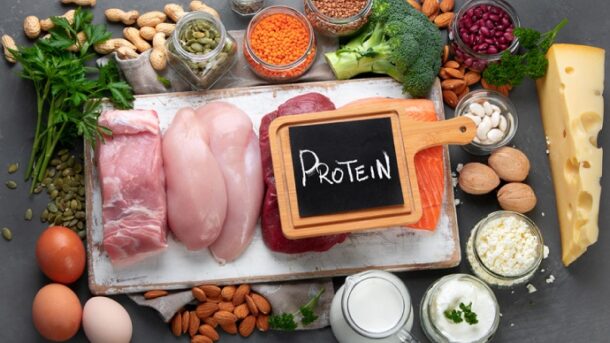
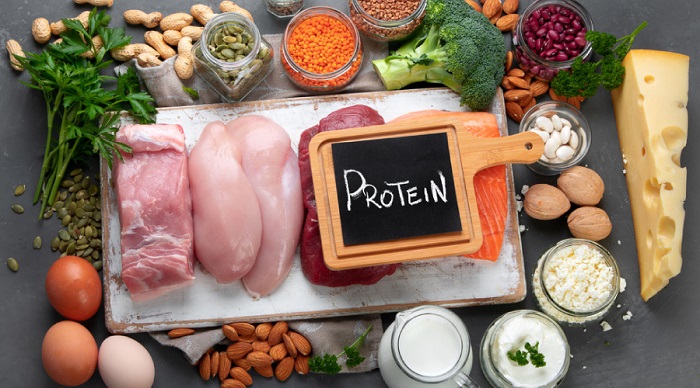
Protein intake ranging from 1.4 to 1.8 grams of protein per kilogram of body weight can be beneficial for an individual involved in an intense training program. Protein has been typecast as something that will make you big and strong, but muscle growth is not controlled by the level of protein one takes; rather, it is the growth demand caused by intense training or stress that will determine how much protein one should take in. We don’t have to consume an extraordinary amount of protein, but taking more than the RDA when exercising is not only safe but beneficial. Excellent sources of protein are lean beef, chicken and turkey breast, salmon and tuna, and milk and eggs.